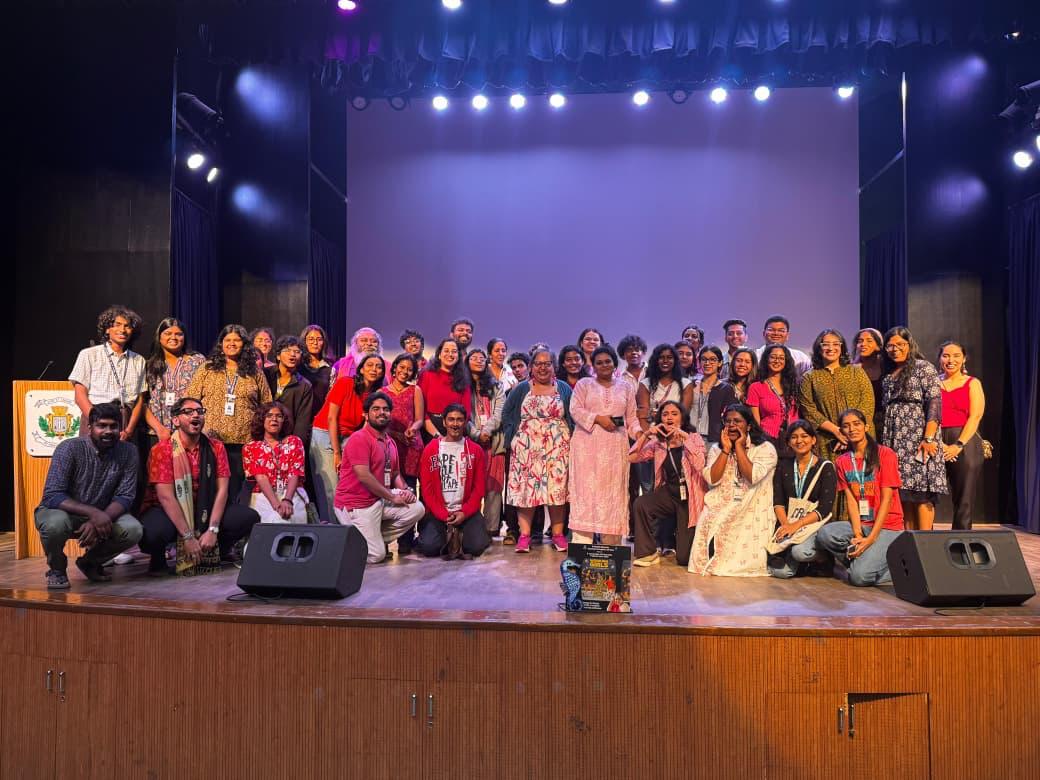
There is a moment in the film Working Girls where a Karragatam dancer is balancing a pot on her head while dancing bare foot on broken glass. As her face winces subtly, she stands up, adjusts her costume, and a beaming smile appears. This isn’t just a dance, it’s the labour of art, it’s work and that is what Paromita Vohra wants us to look at.
I pulled my hair back into a tight little bun muska, ensuring my uninterrupted focus. The lights dimmed and Paromita Vohra settled into her seat, four rows from the back, one row in front of me almost in the middle but not quite. She wore a white frock with flowers splattered all over, as if they were all competing with the big flower in her hair. As the film began, she let out a sigh, maybe relief, maybe gratitude, maybe exhaustion. She’s been traveling non-stop since the release of her new film. After the screening here at Joseph’s, Bangalore; she is going to show the film in Chennai, and then Hyderabad, and then Bombay.
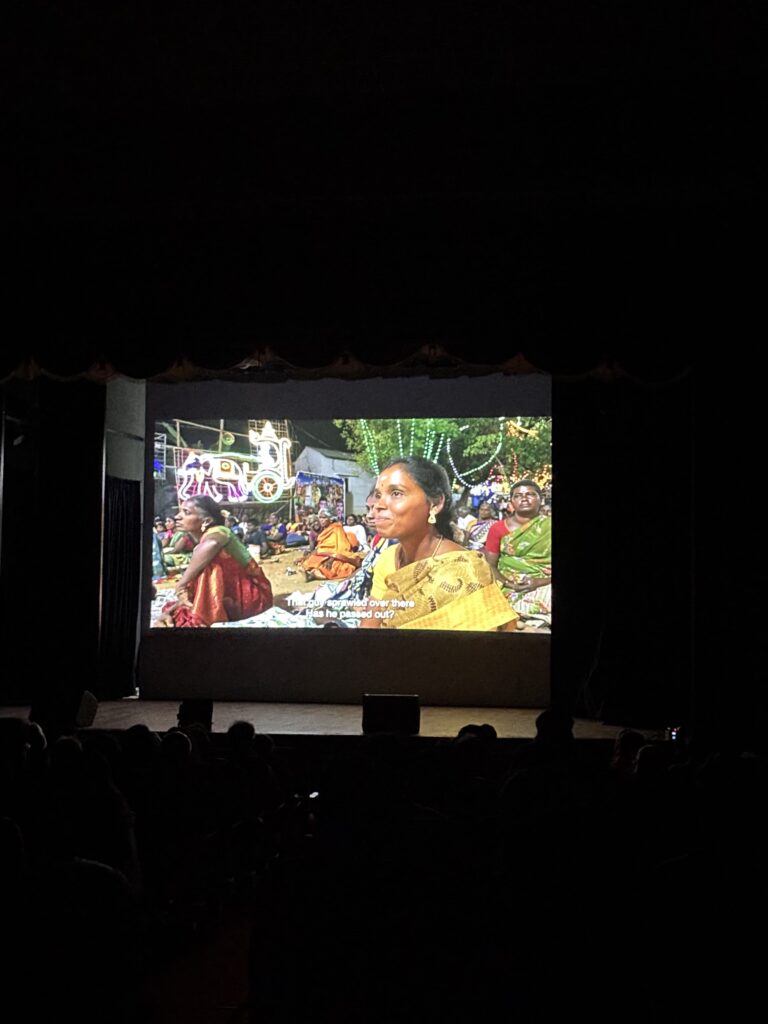
Watching a new Paromita Vohra film, barely days after its release is better than being the first in line to see Caravaggio’s Mary Magdalene in Ecstasy at NGMA. High praise one might think but maybe you should’ve been there. I was excited because the film is centred around girls yes but it is also so much more than that. In the film, I see an intricate patchwork of women’s stories. “Their insights about life were exceptional,” Paromita Vohra said about the girls from Madurai who performed Adal Paadal for a living.
There is pride when the women talk about their work, not only in their eyes but in the way their hands gesture, and the way they emphasise some words more than other. Sneha, one of the dancers, says she didn’t have a boyfriend and didn’t want one either. Having done her bachelor’s in technology she was clear from the beginning about the benefits dancing gave her and remarked “Why should I work in the corporate sector for 8-9 hours to make money? I make more money here. I want to do this.”
Paromita doesn’t just show the fearlessness in these girls; she lingers in its presence, and like us, is humbled by it. I see it most stunningly in one moment from the film. She is sitting with Vanita Mane, a sex worker and Arjun (Mane’s partner) in their bedroom. Vanita is saying that she is never going to leave her job even for love or marriage because work has been the only constant she has ever had in her life. Her partner Arjun is watching her carefully, and at one point when she refers to her independence, he smiles coyishly. Vanita ignores him and continues talking. I am smitten by Vanita. They continue eating lunch, picking apart little pieces of fish from its frail bones.
As Vohra said, “People know their pleasure and resilience in their own way.” Arjun didn’t so much as flinch a finger in response and the camera doesn’t miss this. Knowing he loved this girl regardless of what she does for a living. Maybe we all need partners like Arjun.
Throughout the film, the other constant we see is people’s faith in faith. Regardless of their choices, they were all clear that they are close to God. I am again reminded of Paromita’s words, ‘No working identity is singular’
There is a street in Pune’s red light district called Margi Galli named after the infamous sex worker Margubai. When the film takes us there, we start to notice a zeal these women possess for the work they do and, it only grows. We are shown the incredible dedication and determination of egg donors. A seemingly easy way to make a good amount of money and help others with joy in their lives through little children. The women Vohra interviewed were asked if they felt this was a safe process and if their family knew they were doing this? The answer surprisingly was “yes.” The film’s big achievement is a gentle slap on our faces – we who continue to decide that some kinds of work are more respectful than others or that some work is service not work and therefore okay to not pay. The film gets us to the point where we confront work and respect as things that are/ should be constantly redefined and self-defined by people doing the work – not those outside of it.
The work that Paromita herself does in the film in equally interesting to me. She holds our hands and takes us to four or five different work places and invites us to think, to look, to pause and take joy, smile, and sing with the women we’ve been trained to look at in a certain way all our lives. Her way is so much more liberating, and just as enamoring.
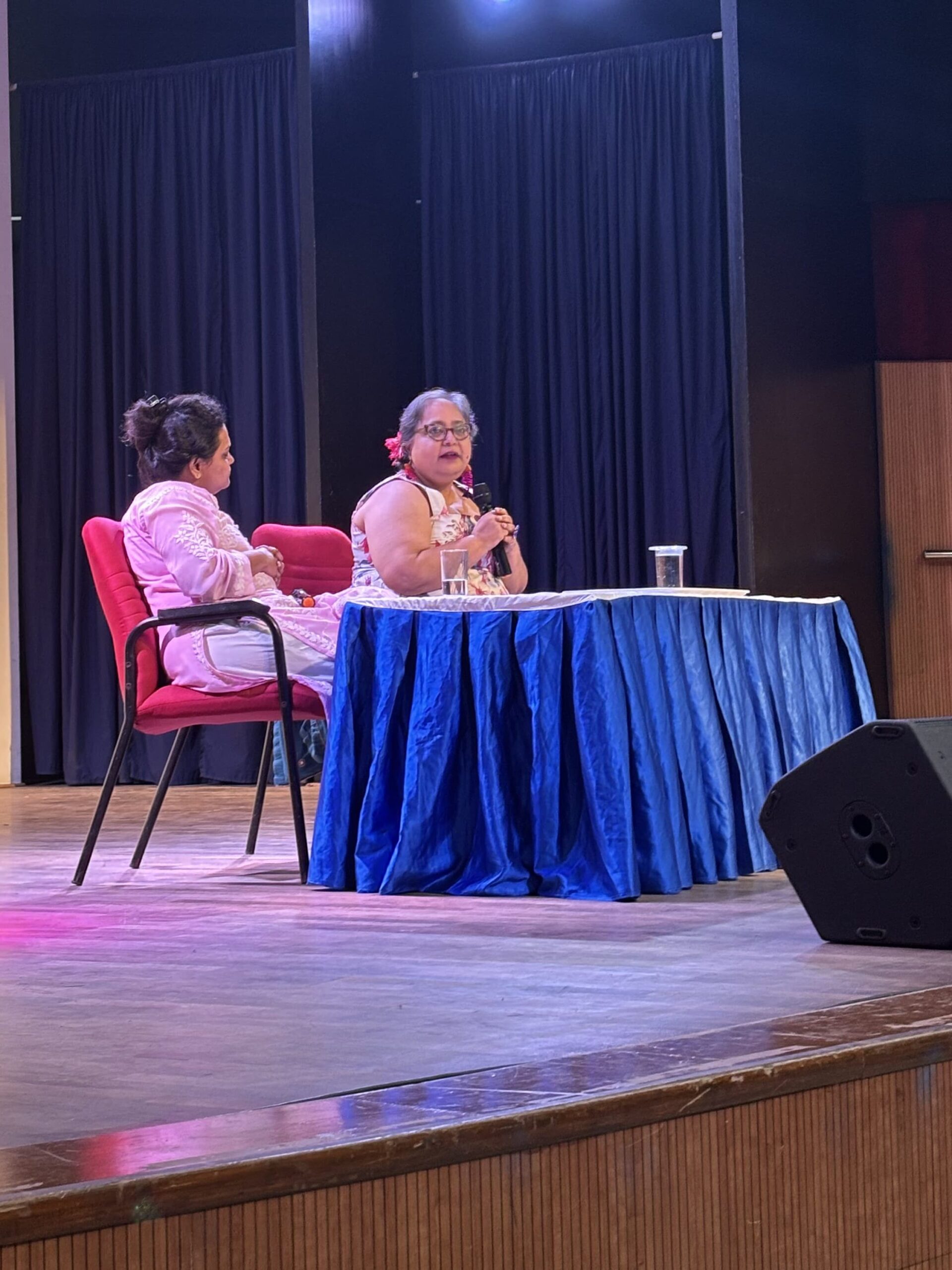
When asked about the women in her film during the Q&A, Paromita Vohra said, “People understand the systemic oppression they are a part of more than anybody else.” The awareness these girls had of their situation was far from victimhood (as we like to assume) and more in line with pride for their work. The film seemed like a plea for human rights, which made me realise how sheltered an environment most of us are a part of or—like she says—it leaves us with some “good middle class guilt.”
In Working Girls, one minute you’re watching a sex worker sitting in her home talking about her pride and dignity and the next scene is of an animated British soldier talking in white-man Hindi, explaining to you the Suppression of Immoral Traffic Act 1957 and talking about how sexually transmitted diseases, although brought into the country by the Red Jackets was supposedly an ‘Indian sex worker’ problem. Those bits are extremely fun, a comedy of sorts akin to if Gandhi and TikTok had a baby in 2025.
Paromita isn’t simply documenting the story she sees, she documents the history of the story that continues to live on. She nudges us to laugh here and there, sure, but also to step aside from the entitlement of our lives and sit with these girls and their vivacity.
When taking us down the rocky road of men and their opinions on women, a quote from the film that summed up equality was “Boys will be boys, but girls must be poise”. The Adal Paadal dance wasn’t done on whim; it was only to be performed at temple festivals. One of the organizers for those festivals remarked, “They can only do this dance till the age of 35, after that the men get bored and because of the age of the women their movements become dull.”
Someone asked a question about how these women probably didn’t see their homely, motherly so-called ‘duties’ as work, although most of them had jobs. Paromita, punching her fist towards the sky asked smilingly, “why is it that our ideas of labour have always been masculine?”
Women’s work isn’t considered typical ‘labour’, except when they decide to have babies a couple of times in their life. I thought about how silly it was to gender words, the men in red jackets and hats have made some funny changes to our country without us even realising.
The focus of the film isn’t to document the women and what they do for the sake of an audience, it is to capture a piece of the history we are currently living in. The sex workers, Karragatam dancers, Aadal Paadal dancers, egg donors, surrogates and so many more working women that go unappreciated and unnoticed.
Someone else asked Paromita about sex workers and their dignity. Paromita, in all her mischief, and an angelic smile asked a very serious question I am going to think about for the rest of my life — “and having bad sex for free is good?”


Ayana Jade Hayward
Latest posts by Ayana Jade Hayward (see all)
- Unlimited Working Girls: an evening with Paromita Vohra - 24th September 2025